October 16, 2026
From Diving to Aquarium Design: How My Love of the Water Became My Career
By Robert Whitcomb
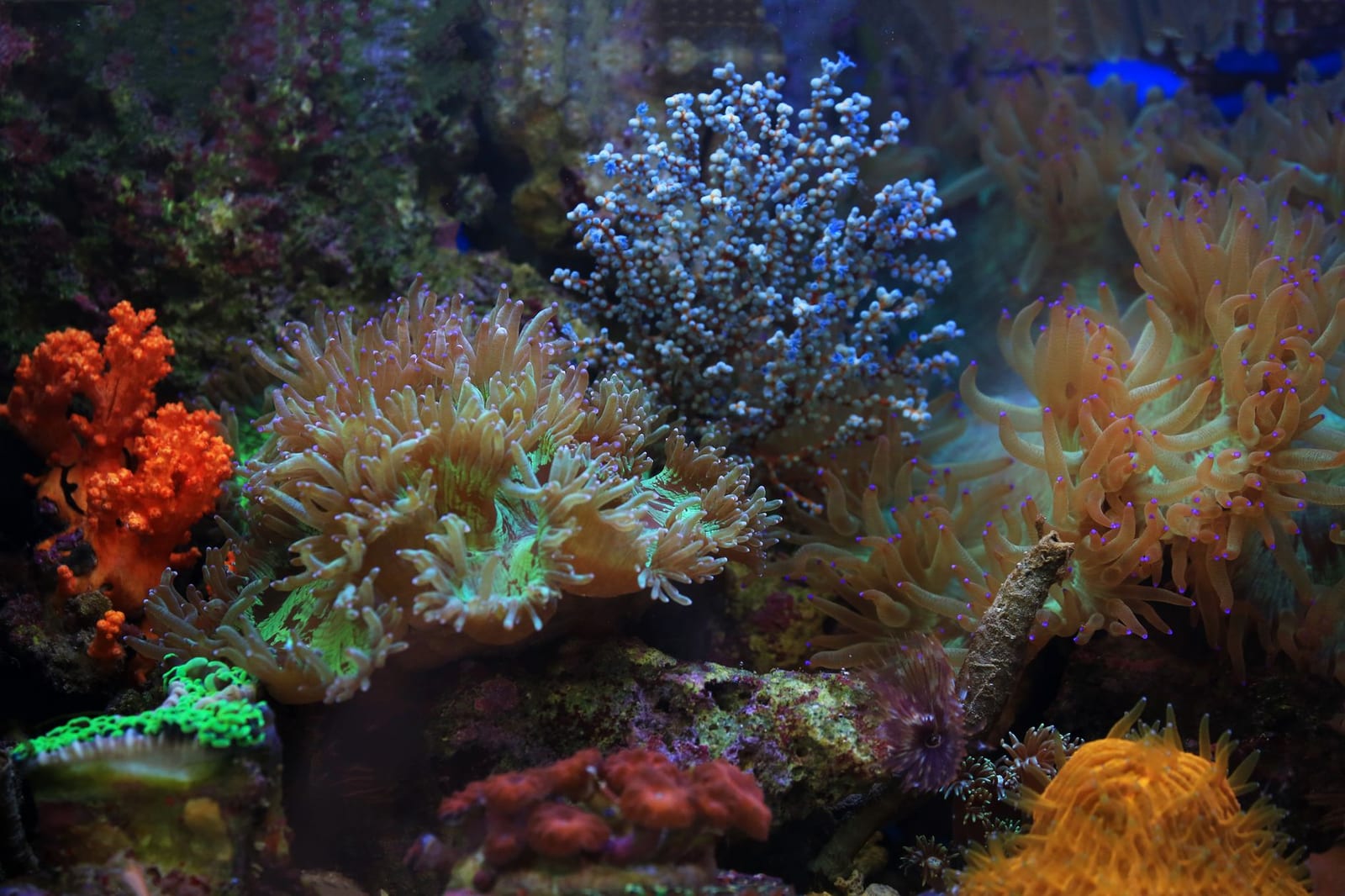
I never sat down as a young man and mapped out a plan to spend nearly three decades working in the aquarium industry. There wasn't some grand business strategy or carefully organized career path. I was simply interested in the water, the creatures living beneath its surface, and the challenge of understanding an environment that most people rarely get to experience up close.
Looking back, that interest changed my life's direction.
My name is Robert Whitcomb Forsyth, and I am the CEO of Innovative Aquatics. I have worked professionally in aquarium design and maintenance for approximately 28 years, but my connection to the industry began long before I started thinking of it as a business.
It started with diving, fishing, and a fascination with aquatic life.
An Interest That Started Beneath the Surface
I was born in Wiesbaden, Germany, and grew up in Stockbridge, Georgia. I didn't spend my early years preparing for a career in aquarium design. Like many people, I developed my interests through the things I enjoyed doing.
For me, those interests included fishing and spending time around the water.
In 1996, I became involved in aquariums as a hobbyist while diving and collecting lobster. That experience helped turn a general interest in aquatic life into something I wanted to understand more deeply.
There is a big difference between looking at fish through the glass of an aquarium and observing aquatic life in its natural environment.
Underwater, you start noticing details that are easy to overlook from the surface. Fish don't all behave the same way. Some stay close to rocks or other structures, while others move through open water. Different environments provide different kinds of shelter, food, and protection.
The more interested I became in aquatic life, the more questions I had.
What makes certain environments suitable for particular species? Why do some animals thrive in one setting but struggle in another? How do water movement, habitat, and environmental conditions influence their behavior?
Those questions eventually became part of the work I do today.
Turning a Hobby Into Something More
There is a moment in many people's lives when an interest starts becoming more than something they do in their spare time.
For me, aquariums gradually became that interest.
Keeping an aquarium successfully requires much more than putting water and fish into a glass tank. You need to understand filtration, water chemistry, equipment, feeding, and the individual needs of the animals.
I enjoyed learning how those pieces worked together.
The technical side of aquarium keeping appealed to me just as much as the visual side. A beautiful aquarium is satisfying to look at, but creating a stable environment is an entirely different challenge.
That combination of creativity and problem-solving helped turn my hobby into a profession.
Over time, I moved into professional aquarium maintenance and design, eventually building my career around what started as a personal interest.
At first, I didn't fully appreciate how much running a business would teach me beyond the technical skills.
Building a Business Wasn't the Easy Part
People sometimes look at someone who has been in business for years and assume the journey must have followed a relatively straightforward path.
Mine certainly didn't.
There was a period in my life when I was essentially homeless. I worked three jobs while trying to build a better future for myself.
When you're in that position, your priorities become pretty clear. You have to figure out how to keep moving forward, even when the circumstances aren't ideal.
Starting my own company wasn't simply about turning something I enjoyed into a source of income. It was also about creating an opportunity to build a more stable future.
I didn't have the luxury of assuming everything would work out.
I had to work, learn, and keep going.
Those experiences influenced how I approach business today. I learned that progress doesn't always happen quickly, and that there will be times when you put in tremendous effort without seeing an immediate reward.
Sometimes the most important thing you can do is remain consistent.
That belief has stayed with me throughout my career.
What the Aquarium Industry Taught Me About Problem-Solving
One reason I've remained interested in aquarium work for so long is that no two systems are exactly alike.
A residential freshwater aquarium presents different challenges from a large commercial saltwater installation. Even two aquariums of similar size can require different approaches depending on their inhabitants, equipment, and surroundings.
You cannot assume that a solution that worked perfectly in one situation will automatically work in another.
For example, an aquarium might develop an algae problem. The easy response is to remove the algae, but that doesn't necessarily address why it appeared.
The underlying issue could involve lighting, excess nutrients, feeding practices, or maintenance routines.
If you only address what you can see, the problem may return.
That is something I've learned to appreciate about this industry. It rewards people who are willing to investigate problems rather than jump to conclusions.
The same principle applies to running a business.
When something goes wrong, whether it's a piece of equipment, a project schedule, or a customer concern, understanding the cause is usually more valuable than rushing toward the first available solution.
Why Experience Doesn't Mean You Stop Learning
After approximately 28 years in the aquarium industry, I still believe there is more to learn.
Equipment changes. New products become available. Our understanding of aquatic environments keeps evolving, and customers have different expectations than they did when I started.
I don't think experience should make someone resistant to change.
If anything, spending decades in an industry should make you more aware of how much there is to understand.
One of my personal beliefs is that you should never become completely satisfied with past success. That doesn't mean you can't appreciate what you've accomplished. It means recognizing that yesterday's accomplishments don't automatically solve tomorrow's problems.
I try to bring that attitude to my work.
There is always an opportunity to improve a process, learn a new technique, or approach a challenge differently.
The moment you decide you already know everything is usually the moment you stop improving.
The Values That Helped Me Keep Going
When I think about the people who influenced my life, my parents are at the top of the list.
The values I developed growing up have stayed with me through difficult circumstances, long workdays, and the responsibilities of owning a business.
My faith has also played an important role in how I approach challenges and moments of self-doubt.
I believe in putting God first, particularly when circumstances become difficult or the next step isn't obvious.
That doesn't mean every problem suddenly becomes easy. Running a business still requires hard decisions, persistence, and a willingness to accept responsibility when things don't go according to plan.
But a foundation of personal values has helped me stay grounded.
I define success through perseverance, overcoming obstacles, and continuing forward.
That definition comes from experience, not from a business textbook.
Still Connected to the Water
Even after making aquariums my profession, diving and fishing remain personal interests.
I think that connection matters.
When you spend years working in a particular industry, it can become easy to focus entirely on schedules, equipment, customers, and daily responsibilities. Those things are important, but I also believe it's worth remembering what made the work interesting in the first place.
For me, that original fascination with aquatic life has never completely disappeared.
I still appreciate the complexity of underwater environments and the challenge of creating aquarium systems that support the animals living in them.
Through Innovative Aquatics, I've turned that interest into a career that combines technical knowledge, creativity, problem-solving, and entrepreneurship.
I couldn't have predicted all of that when I first became interested in aquariums in 1996.
And I certainly couldn't have predicted every obstacle I would face along the way.
But looking back, I'm glad I followed that interest and kept working toward something bigger.
What started as a fascination with the water became a profession, a business, and an important part of my life. Nearly three decades later, I'm still curious where that journey will take me.